?

Operational Manual for Bentchtop Autoclaver

A collection of operational manuals for essential instrument in microbiology/microbial genomics laboratories.

Share This Post

Table of Contents

Key Specs
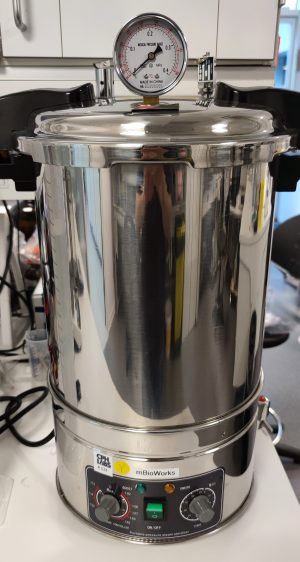
  • A potable steam pressure sterilizer made of stainless steel.

  • Total volume 18L, 2kw, max. 28 cm , 23.5 cm – height.

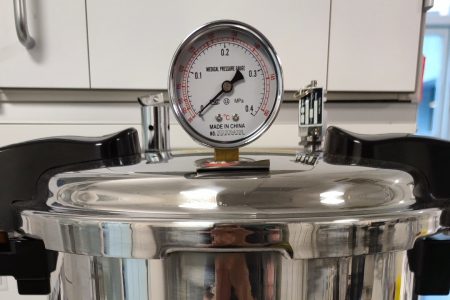
  • 121-126 °C, 0.11-0.142 MPa.

  • Safety first, always ask before use.

Instrument Overview
autoclaver
Manual
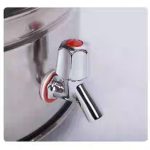
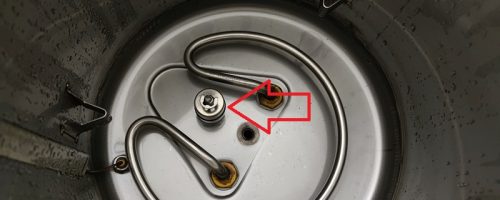
1. Make sure the water discharge valve is tightly closed off.
valve
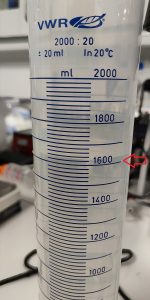
2. Rotate open the lid of the autoclaver. Add ~1.6 L deminalized pure water into the chamber.
water
3. Visually check the water level to make sure the small floating cell used as the water level indicator hits the top, but not being completely submerged.
check
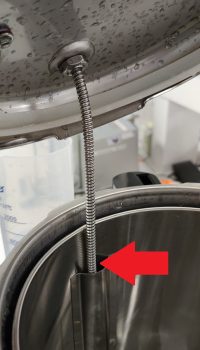
4. Put the steel load bucket in and rotate close the lid. Make sure the pressure sensor is placed at the right location.
sensor
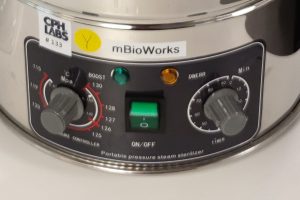
5. Set a right pressure and an appropriate time by turning the knobs. Commonly set as 121 °C for 15-30 mins for most applications in microbiology.
knobs
6. Make sure the lid is positioned correctly and then power on. Once finished, an alarm will ring. Power off and wait till the autoclaver cools down to room temperature (ca. 30-60 mins) before opening. 
DO NOT OPEN IT WHEN IT IS STILL HOT. STEAM MAY CAUSE INJURY!
autoclaver-s

Subscribe To Our Newsletter

Get updates and learn from the best

More To Explore

WetLab Protocols

PCR Primers for Microbial Community Profiling

PCR primer choice shapes what microbial community profiling detects and how comparable results are across studies. Here is a quick reference list of commonly used primers for major targets—16S rRNA (bacteria/archaea), ITS (fungi), and other standard marker genes.

Read More »
Admin

mBioWorks AI Assistants

The virtual AI assistant for mBioWorks was built with OpenAI’s latest LLM models and RAG technologies. It can search a local knowledge database and return an accurate answer to user’s query.

Read More »
Technical documents

Sample Prep & Shipping

We accept various samples including DNA, microbial pure cultures, and environmental collections like soil, lake water, filters, swabs, plant or animal materials, any items or objects colonized by microbes.

Read More »

live a life as light as microbes

Do You Want To share your project or recieve a quote?